Connect with us

Blogs

Easy Christmas Songs on Piano: 25 Beginner-Friendly Holiday Songs to Learn

Published

on

Easy Christmas Songs on Piano

Learning easy Christmas songs on piano is one of the most enjoyable ways for beginners to practice their instrument during the holiday season. Christmas music is especially suitable for new piano players because many traditional carols use familiar melodies, repeating patterns, straightforward rhythms, and relatively simple chord progressions. Whether you have been playing piano for only a few weeks, are teaching a child their first holiday songs, or simply want to entertain family and friends during a Christmas gathering, there are plenty of songs that can be adapted to an accessible beginner level. You do not need to master complicated scales, fast passages, or advanced piano techniques before you can start playing recognizable Christmas music. With regular practice and a simplified arrangement, even a new player can learn several beloved holiday melodies and gradually build confidence at the keyboard.

The best easy Christmas songs on piano are those that allow beginners to concentrate on musical fundamentals without becoming overwhelmed. Songs such as “Jingle Bells,” “Silent Night,” “We Wish You a Merry Christmas,” and “O Christmas Tree” contain memorable melodies that many people already know, making it easier to recognize mistakes and stay oriented while playing. Some songs can be learned initially with the right hand playing only the melody, then developed by adding simple left-hand chords. This approach makes Christmas piano practice both practical and rewarding because players can hear progress almost immediately. In this guide, we will explore some of the best beginner-friendly Christmas songs, explain why they are easy to learn, discuss useful chords and techniques, and provide practical tips for building a small holiday repertoire.

Why Easy Christmas Songs Are Great for Beginner Piano Players

Christmas songs are excellent learning material because their melodies are often familiar before a beginner even sits at the piano. When you already know how a song sounds, you have an advantage because your ears can help guide your fingers. Instead of trying to understand an unfamiliar melody from scratch, you can mentally hear the next phrase and use that knowledge to check whether you are playing the correct notes. This makes easy Christmas piano songs useful for practicing rhythm, note recognition, hand coordination, and musical memory. Many traditional holiday songs also have repeating sections, which means that learning one part can help you understand another part of the same song. For beginners, this repetition can make practice feel less like memorizing a long piece and more like mastering a series of manageable musical patterns.

Another advantage is that Christmas songs can be simplified in several different ways. A beginner can start by playing a single-note melody with the right hand, then add individual bass notes with the left hand, and eventually progress to full chords or more elaborate accompaniment. This creates a natural progression from very easy arrangements toward intermediate playing without requiring you to change songs every time your skills improve. If a particular arrangement feels too difficult, you can remove some of the left-hand notes or slow the tempo. The objective is not to reproduce a complicated professional arrangement immediately; it is to create a version that matches your current ability while giving you room to develop.

25 Easy Christmas Songs on Piano

1. Jingle Bells

“Jingle Bells” is one of the best-known choices for anyone searching for easy Christmas songs on piano. Its lively melody is highly recognizable, and a simplified version can usually be played using a relatively small range of notes. Beginners can start with the melody in the right hand and add basic chords with the left hand once they become comfortable. Because the song has a repeating and memorable structure, it is also useful for practicing rhythm and maintaining a steady tempo.

2. Silent Night

“Silent Night” is an excellent beginner Christmas piano song because its melody moves at a gentle pace and is easy to sing along with. The slower character of the song gives new players more time to find the correct notes and coordinate both hands. It can sound beautiful even when played very simply, which makes it particularly rewarding for beginners. Once the basic melody is secure, simple block chords can be added to create a fuller sound.

3. We Wish You a Merry Christmas

“We Wish You a Merry Christmas” is another excellent choice for beginners because the melody is familiar and relatively straightforward. It is particularly suitable for practicing short musical phrases and repeating patterns. A beginner arrangement can use the right hand for the melody while the left hand plays a small number of basic chords. This song is also a fun option for children because its cheerful melody immediately creates a festive atmosphere.

4. O Christmas Tree

“O Christmas Tree” has a calm, memorable melody that works well as a simple piano arrangement. Beginners can learn the tune slowly with one hand before introducing basic harmony. Because the melody has a clear shape, it can also help students learn how musical phrases rise, fall, and resolve. Playing this song softly can make it sound surprisingly polished even when the arrangement itself is very simple.

5. Deck the Halls

“Deck the Halls” is a cheerful traditional Christmas song that can be adapted for beginner piano. Its repeated melodic ideas make it easier to remember after a few practice sessions. Beginners should start slowly rather than trying to imitate the fast tempo of more advanced performances. Once the notes become comfortable, gradually increasing the speed can turn the exercise into useful rhythm and coordination practice.

6. Joy to the World

“Joy to the World” is a popular Christmas carol with a strong and recognizable melody. While advanced arrangements can be technically demanding, a simplified beginner version can focus on the principal melody and basic accompaniment. This makes it a good example of how almost any Christmas song can be adjusted to suit different skill levels. Beginners should concentrate on accurate notes and steady rhythm before attempting decorative runs or more complicated accompaniment.

7. Away in a Manger

“Away in a Manger” is especially suitable for new piano players because it has a gentle melody and a relaxed musical character. The song gives beginners an opportunity to practice playing expressively rather than simply focusing on speed. A slow arrangement with simple chords can sound warm and complete. It is also an excellent choice for young students learning to connect individual notes into smooth musical phrases.

8. The First Noel

“The First Noel” is another traditional carol that can work very well in a beginner piano collection. Its melody is recognizable and can be learned gradually in small sections. Students can first practice each phrase separately, then connect those phrases together. Adding basic left-hand chords later provides an introduction to harmony while keeping the overall arrangement manageable.

9. O Come, All Ye Faithful

“O Come, All Ye Faithful” has a bold melody that sounds impressive even when simplified. Beginners can play the melody with the right hand and use simple bass notes or chords underneath it. This makes the song useful for students who want their performance to sound fuller without learning an advanced arrangement. It can also help develop confidence when transitioning between different chords.

10. Rudolph the Red-Nosed Reindeer

For children and younger beginners, “Rudolph the Red-Nosed Reindeer” can be an especially enjoyable option. The melody is familiar, playful, and easy to recognize, which makes practice more engaging. A simplified arrangement allows children to concentrate on locating notes and following the rhythm without being distracted by complicated technique. Familiar songs can also encourage children to practice voluntarily because they already enjoy the music.

11. Frosty the Snowman

“Frosty the Snowman” is another fun choice for beginners and children. The cheerful melody provides a nice opportunity to practice rhythm and musical expression. Students can start with a simple melody arrangement and later experiment with different left-hand accompaniment patterns. Because the song has a strong character, players can also learn how tempo and dynamics influence the mood of a performance.

12. Santa Claus Is Coming to Town

“Santa Claus Is Coming to Town” has a lively holiday character and can be simplified for beginner piano. It is a good choice for players who want something more energetic than slower carols. Beginners should focus on playing accurately at a comfortable tempo instead of trying to play quickly from the beginning. Once the notes are familiar, gradually increasing the speed can make the performance more exciting.

13. Up on the Housetop

“Up on the Housetop” is a traditional Christmas song with a playful melody that can be enjoyable for children and adults. Its familiar structure makes it easier to memorize after repeated practice. A beginner arrangement can keep the accompaniment extremely simple while allowing the melody to remain the main focus. This is useful for new players who are still developing confidence with two-hand playing.

14. Hark! The Herald Angels Sing

Although more elaborate arrangements can be difficult, a simplified version of “Hark! The Herald Angels Sing” can be accessible to beginners. The melody is strong and memorable, and players can initially focus on the tune without worrying about advanced accompaniment. It is particularly effective as a learning exercise because it encourages players to maintain consistent rhythm while moving between different notes.

15. God Rest Ye Merry, Gentlemen

“God Rest Ye Merry, Gentlemen” has a distinctive traditional sound and works well as a simple piano arrangement. Beginners can use the melody to practice controlled playing and gradually introduce basic chords. The song’s darker, more mysterious character also gives students a chance to explore musical expression beyond cheerful Christmas tunes.

16. What Child Is This?

“What Child Is This?” is a beautiful choice for beginners who prefer slower and more expressive music. Its melody can be played gently, and simple chord accompaniment can create a rich sound without requiring advanced technique. This song is particularly useful for learning how to maintain a relaxed tempo and play with appropriate dynamics.

17. Angels We Have Heard on High

“Angels We Have Heard on High” is recognizable for its memorable melody and festive character. Beginners may want to use a simplified arrangement that removes some of the more demanding passages found in advanced versions. Learning it slowly can help develop finger control and coordination. Once comfortable, players can explore more elaborate arrangements as their skills improve.

18. O Little Town of Bethlehem

“O Little Town of Bethlehem” has a peaceful melody that lends itself naturally to beginner piano arrangements. Players can focus on producing an even tone and connecting phrases smoothly. Because the song is not dependent on a fast tempo, beginners have more time to think about finger placement. It can therefore be a relaxing piece to practice during the holiday season.

19. Have Yourself a Merry Little Christmas

“Have Yourself a Merry Little Christmas” is a popular holiday standard that can be simplified for piano. The melody is expressive, making it a good choice for players who want to move beyond basic note accuracy and begin thinking about musical interpretation. A simple chord progression can provide enough accompaniment to make the song sound complete without requiring an advanced arrangement.

20. Let It Snow! Let It Snow! Let It Snow!

“Let It Snow!” is a fun holiday standard that can work particularly well for players who enjoy popular Christmas music. Beginners can begin with the melody and eventually learn a simple chord-based accompaniment. The song can also introduce players to swing-style rhythms and a different musical feel from traditional Christmas carols.

21. Winter Wonderland

“Winter Wonderland” offers another recognizable melody for beginner and early-intermediate players. A simplified arrangement can reduce difficult chord changes while preserving the essential melody. It is a good choice for learners who want to expand beyond traditional carols and explore popular seasonal songs.

22. Silver Bells

“Silver Bells” is a gentle Christmas standard that can sound elegant on piano even with a relatively simple arrangement. Beginners can work on playing the melody smoothly and adding basic chords underneath it. The song is particularly useful for learning how accompaniment supports a melody without overpowering it.

23. The Christmas Song

Often associated with the opening words “Chestnuts roasting on an open fire,” “The Christmas Song” can be adapted into a beginner-friendly piano arrangement. Some original harmonies may be more advanced, but simplified chord versions are possible. This makes it an excellent song for players who want to learn a familiar seasonal standard while gradually becoming comfortable with richer harmonies.

24. Carol of the Bells

“Carol of the Bells” is famous for its repeating musical pattern. While advanced versions can be challenging, the repeating motif can actually make a simplified version approachable when practiced slowly. Beginners should avoid trying to play fast immediately. Learning the repeating pattern accurately first provides a strong foundation before increasing the tempo.

25. Auld Lang Syne

Although primarily associated with New Year’s celebrations, “Auld Lang Syne” is often played during the holiday season and makes a useful addition to a Christmas and winter piano repertoire. Its familiar melody is relatively easy to recognize, and a simple arrangement can be played effectively with basic accompaniment. It can also serve as a transition from Christmas music into New Year’s celebrations.

Easy Christmas Piano Songs With Simple Chords

One of the easiest ways to make a beginner piano arrangement sound more complete is to use simple Christmas piano chords. Instead of trying to play complicated arrangements containing many notes, beginners can play the melody with the right hand while using basic major and minor chords with the left hand. Depending on the key and arrangement, familiar chords such as C, G, F, Am, Dm, and Em can appear in many accessible songs. The exact chords vary from song to song, so beginners should always use the chord progression appropriate to the specific arrangement they are learning rather than assuming that every song uses the same sequence.

Chord-based playing also provides a useful bridge between beginner and intermediate piano skills. Once you can comfortably change between several basic chords, you can experiment with different accompaniment patterns. For example, you might begin with one chord played as a whole block, then divide the chord into individual notes, and eventually use broken-chord patterns. This allows a simple Christmas song to sound increasingly sophisticated without requiring you to completely relearn the melody.

Easy Christmas Songs on Piano for Kids

Children often learn easy Christmas songs on piano particularly well because holiday melodies are already familiar to them from school, family gatherings, movies, television, and seasonal celebrations. Songs such as “Jingle Bells,” “Rudolph the Red-Nosed Reindeer,” “Frosty the Snowman,” “We Wish You a Merry Christmas,” and “Up on the Housetop” can be especially motivating. For younger students, it is usually better to begin with a very short section rather than expecting them to learn an entire song at once. Once they can play the first phrase confidently, another phrase can be added until the complete melody becomes familiar.

Parents and teachers can also make Christmas piano practice more enjoyable by turning it into a performance goal. Instead of simply telling a child to practice for a certain amount of time, give them a specific objective such as learning the first section of “Jingle Bells” or playing a song for family members. Small achievements provide immediate feedback and can help maintain motivation. The most important thing is to keep the difficulty appropriate; a song that is technically too difficult can make a beginner feel frustrated, while a song that is slightly challenging but achievable can create a strong sense of accomplishment.

How to Learn Easy Christmas Songs on Piano

The best way to learn a new Christmas piano song is to divide it into manageable sections rather than attempting to play the entire piece immediately. Start by identifying the key and locating the first few notes. Practice the melody slowly with your right hand until you can play it without constantly stopping to search for each note. After that, divide the song into short phrases and practice each phrase repeatedly. When two phrases feel comfortable individually, connect them together. This gradual approach reduces mistakes and helps develop muscle memory. Once the right-hand melody is reasonably secure, introduce the left hand using simple bass notes or chords.

Another important technique is slow practice. Beginners often make the mistake of attempting to play a song at its original performance speed before they know the notes. This can reinforce mistakes and make the song harder to learn. Playing slowly gives your brain and fingers enough time to process each movement correctly. You can increase the tempo gradually as your accuracy improves. Using a metronome can also help you develop a consistent rhythm, although beginners should prioritize correct notes and relaxed technique over speed.

How Long Does It Take to Learn an Easy Christmas Song?

The amount of time required depends on the song, the player’s previous experience, and the complexity of the chosen arrangement. A complete beginner may learn a very short melody within a few practice sessions, while a song involving two-hand coordination and several chords may take considerably longer. The key is to measure progress by accuracy and confidence rather than by the number of days required. Practicing for a short period consistently can be more productive than having one long practice session followed by several days without playing.

If you are preparing for Christmas, creating a small repertoire can be more effective than trying to master one complicated arrangement. For example, learning five simple songs well can give you a useful collection of holiday music to perform. You can begin with one-hand melodies, then gradually add left-hand chords to the songs you enjoy most. This approach keeps practice manageable while helping you build a broader set of piano skills.

Tips for Making Beginner Christmas Piano Songs Sound Better

A simple arrangement does not have to sound boring. One of the easiest ways to improve a beginner Christmas piano performance is to pay attention to dynamics, rhythm, and phrasing. Rather than playing every note with exactly the same volume, think about which parts of the melody should sound stronger and which should be softer. Allowing the melody to breathe between phrases can also make the performance sound more musical. Even basic chords can sound attractive when they are played with a steady rhythm and appropriate dynamics.

Pedaling can also add richness, but beginners should use it carefully. Holding the sustain pedal continuously can cause different chords and notes to blend together and create a muddy sound. Instead, practice changing the pedal when the harmony changes, assuming the arrangement and piano technique call for it. If you are still learning basic coordination, it is perfectly acceptable to leave the pedal out initially. Accurate notes, rhythm, and relaxed hands are more important foundations than advanced effects.

Common Mistakes Beginners Make When Learning Christmas Piano Songs

One common mistake is choosing a song based on how impressive the original recording sounds rather than how difficult the piano arrangement is. A Christmas song may have a simple melody but a complicated professional accompaniment. Beginners should therefore look specifically for arrangements labeled beginner, easy, simplified, or elementary. Another mistake is trying to learn too many songs simultaneously. While it is tempting to download or collect dozens of Christmas arrangements, concentrating on a few songs at a time usually produces better results.

Another frequent problem is practicing mistakes repeatedly. If you consistently play the same wrong note or rhythm, your fingers can begin to memorize the error. When you notice a mistake, slow down and isolate the difficult section. Practice that small passage several times correctly before returning to the entire song. It is also important to avoid excessive tension in the hands and shoulders. Relaxed playing allows smoother movement and reduces unnecessary fatigue during practice.

How to Build a Christmas Piano Playlist for Beginners

A well-balanced beginner Christmas piano playlist should contain songs with different moods and levels of difficulty. You could begin with an extremely easy song such as “Jingle Bells,” then add a slower carol such as “Silent Night,” followed by a cheerful song such as “We Wish You a Merry Christmas.” After becoming comfortable with those pieces, you can add slightly more challenging songs such as “Joy to the World” or “Carol of the Bells.” This creates a gradual progression rather than forcing you to learn several difficult pieces at the same time.

It is also helpful to include songs that you personally enjoy. Motivation matters when learning piano, and a familiar song can encourage you to practice more frequently. If your goal is to play for family and friends, choose songs that your audience is likely to recognize. If you are learning purely for enjoyment, select songs that match your favorite holiday style. A small collection of songs that you genuinely enjoy playing is often more valuable than a large collection that feels like homework.

Conclusion

Learning easy Christmas songs on piano is a fun and practical way for beginners to develop their musical skills while enjoying some of the most recognizable songs of the holiday season. From “Jingle Bells” and “Silent Night” to “Rudolph the Red-Nosed Reindeer,” “We Wish You a Merry Christmas,” and “Joy to the World,” there are many songs that can be simplified for new players. The best approach is to begin with the melody, practice slowly, divide difficult sections into smaller parts, and gradually introduce simple left-hand chords and accompaniment patterns. With consistent practice, even a complete beginner can build a festive collection of songs suitable for playing at home, school events, family gatherings, or holiday celebrations.

The most important thing is to choose arrangements that match your current ability and focus on steady improvement rather than perfection. Christmas music is meant to be enjoyed, and a simple piano performance can still create a warm and memorable atmosphere. Whether you are an adult learning piano for the first time, a parent helping a child practice, or an experienced player looking for easy seasonal arrangements, starting with accessible Christmas songs on piano gives you an enjoyable way to combine learning and celebration.

Frequently Asked Questions

What is the easiest Christmas song to play on piano?

“Jingle Bells” is often a good starting point for beginners because its melody is highly familiar and can be simplified considerably. “Silent Night” and “We Wish You a Merry Christmas” are also excellent choices for players who are just beginning.

What Christmas songs are easy to play on piano for beginners?

Good beginner choices include “Jingle Bells,” “Silent Night,” “O Christmas Tree,” “We Wish You a Merry Christmas,” “Away in a Manger,” “Rudolph the Red-Nosed Reindeer,” and “Frosty the Snowman.” The difficulty ultimately depends on the arrangement you choose.

Can I learn Christmas songs on piano without knowing chords?

Yes. Beginners can start by playing the melody with one hand without knowing chords. After becoming comfortable with the melody, learning a few basic chords can help you create a fuller two-hand arrangement.

What are the best easy Christmas piano songs for kids?

“Jingle Bells,” “Rudolph the Red-Nosed Reindeer,” “Frosty the Snowman,” “We Wish You a Merry Christmas,” and “Up on the Housetop” are good options because children often recognize and enjoy these melodies.

How can I learn Christmas piano songs faster?

Practice slowly, divide each song into short sections, repeat difficult passages, and gradually increase your speed. Learning the right-hand melody first and adding simple left-hand chords afterward can also make the process easier.

Are Christmas songs good for learning piano?

Yes. Many Christmas songs have memorable melodies, repeating patterns, and accessible rhythms, making them useful for practicing note recognition, rhythm, coordination, chords, and musical expression.

What should a beginner learn first: melody or chords?

For most beginners, learning the melody first is easier. Once you can play the melody comfortably, you can introduce simple left-hand chords and gradually develop a fuller arrangement.

Can easy Christmas songs on piano still sound impressive?

Absolutely. A simple arrangement can sound excellent when played with accurate rhythm, appropriate dynamics, smooth phrasing, and controlled use of the sustain pedal. Good musical expression often matters more than technical complexity.

Continue Reading
Click to comment

Leave a Reply

Your email address will not be published. Required fields are marked *

Blogs

Ford Focus 2016 Car: Complete Guide, Features, Performance, Reliability and Buying Advice

Published

on

The Ford Focus 2016 car remains an interesting choice for drivers looking for a compact vehicle that combines practical dimensions, comfortable everyday driving, modern styling, and a range of useful features. As a member of Ford’s long-running Focus family, the 2016 model was designed to compete in a crowded compact-car market against vehicles such as the Honda Civic, Toyota Corolla, Mazda3, Volkswagen Golf, and Hyundai Elantra. The Focus was offered in different body styles and configurations depending on the market, giving buyers options ranging from practical commuting cars to sportier versions. Even though the 2016 Ford Focus is now an older used vehicle, it can still attract shoppers who want an affordable compact car, particularly when they find an example with a good maintenance history and reasonable mileage.

When considering a 2016 Ford Focus, however, buyers should look beyond its appearance and advertised price. Used-car condition can vary significantly because these vehicles have now been on the road for many years. Maintenance records, transmission behavior, engine condition, accident history, mileage, previous ownership, and regional specifications can all have a major effect on whether a particular Focus is a good purchase. Understanding the car’s strengths and potential weaknesses before buying can help shoppers make a more informed decision. This guide examines the Ford Focus 2016 car in detail, including its design, engine choices, interior, driving experience, fuel economy, reliability considerations, common problems, maintenance, and used-car buying advice.

Ford Focus 2016 Overview

The 2016 Ford Focus was positioned as a compact car that emphasized responsive handling, attractive styling, useful technology, and everyday practicality. Its relatively compact exterior made it suitable for urban driving and parking, while its interior provided enough space for normal commuting and small-family use. Depending on the market, buyers could encounter sedan and hatchback versions, while equipment levels varied substantially. Some examples were basic transportation-focused models, while higher trims included additional convenience, infotainment, safety, and comfort equipment. This variation is particularly important in the used market because two 2016 Focus vehicles with similar mileage can have noticeably different specifications and equipment.

One of the reasons the Focus attracted attention was its driving character. Ford traditionally emphasized handling and steering response in the Focus, giving it a somewhat more engaging feel than some compact competitors that prioritized comfort above everything else. The 2016 model continued that approach while offering a design that looked more mature than earlier Focus generations. For buyers who want a compact used car that is easy to maneuver but does not feel completely ordinary behind the wheel, the Focus can still be appealing.

2016 Ford Focus Exterior Design

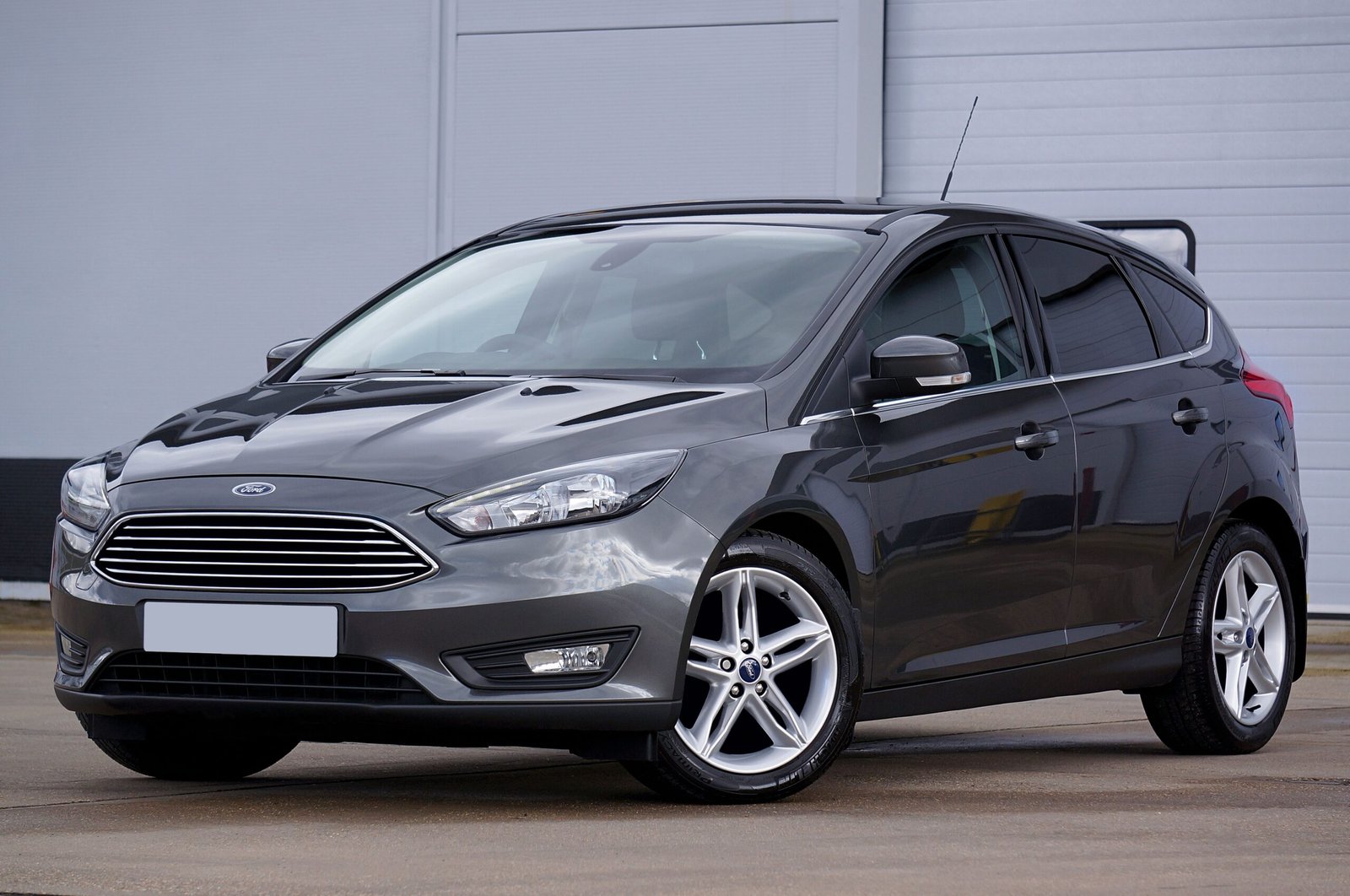
The exterior design of the Ford Focus 2016 car gives it a recognizable appearance without being excessively aggressive. The front end features Ford’s characteristic grille and swept-back headlamp design, while the body has smooth lines intended to improve both appearance and aerodynamic efficiency. The hatchback version provides a sportier visual profile and can offer additional flexibility for carrying luggage or larger objects compared with a conventional sedan.

Because styling preferences are subjective, the Focus has aged differently in the eyes of different buyers. Some shoppers may prefer its relatively clean and modern appearance, while others may consider newer compact cars more visually impressive. Nevertheless, a well-maintained 2016 Focus can still look attractive, particularly when the exterior paint, wheels, lights, glass, and body panels have been properly cared for. When inspecting a used example, buyers should pay attention not only to cosmetic condition but also to evidence of previous accidents, uneven panel gaps, mismatched paint, rust, damaged bumpers, and poorly repaired bodywork.

Interior and Comfort

Inside, the 2016 Ford Focus offers a driver-oriented cabin with controls and displays designed around everyday usability. Depending on trim level and options, equipment could include features such as an infotainment system, steering-wheel controls, Bluetooth connectivity, climate-control functions, power accessories, and upgraded audio equipment. Higher-specification examples can feel substantially more desirable than entry-level versions because of their additional convenience features.

The front seats generally provide the kind of space expected from a compact car, making the Focus suitable for commuting and daily transportation. Rear-seat space is more limited, which is common in this class, so buyers who regularly transport several adults should test the vehicle before purchasing. The hatchback can be particularly useful for people who value cargo flexibility. Folding the rear seats can create a more versatile loading area, making the car useful for shopping, luggage, and other everyday needs.

Engine and Performance

The engine specifications of a 2016 Ford Focus depend on the market and configuration, so shoppers should verify the exact engine fitted to the individual vehicle rather than assuming every Focus has identical mechanical specifications. In markets where gasoline four-cylinder engines were offered, the Focus generally delivered enough performance for normal city and highway driving while maintaining the efficiency expected from a compact vehicle.

The Focus was not designed primarily as a high-performance car in its standard configurations, but its handling characteristics can make ordinary driving more enjoyable. Steering response and cornering behavior are among the qualities that can distinguish the Focus from some competitors. Drivers who prioritize a balanced combination of fuel economy, maneuverability, and handling may appreciate this characteristic. Performance should nevertheless be evaluated in the context of the car’s age, because a poorly maintained example may feel significantly different from one that has received regular servicing.

Fuel Economy

Fuel economy is one of the important reasons buyers consider compact cars such as the Focus. A properly maintained 2016 Focus can provide reasonable fuel efficiency for commuting, although the exact figures depend on engine, transmission, body style, driving conditions, traffic, tire condition, and driving habits. Stop-and-go urban traffic typically produces different results from steady highway driving.

When shopping for a used Ford Focus 2016 car, buyers should not rely entirely on the original fuel-economy rating. A vehicle that has accumulated many years and thousands of miles may deliver different real-world consumption because of aging components, tire pressure, alignment, engine maintenance, air-filter condition, and driving style. Tracking actual fuel consumption over several tanks can provide a much better understanding of an individual car’s efficiency.

Transmission and Driving Experience

The transmission is one of the most important areas to investigate when purchasing a used 2016 Focus. Depending on the market and configuration, different transmission choices were available, and the behavior of the particular vehicle should be carefully evaluated during a test drive. Buyers should pay attention to hesitation, unusual noises, harsh engagement, shuddering, slipping, delayed response, warning lights, or other abnormal behavior.

A test drive should include both slow urban driving and faster road conditions where possible. Starting from a stop, accelerating gradually, accelerating more firmly, reversing, and moving through different gears can reveal problems that may not be obvious during a short drive around a parking lot. If the transmission behaves unusually, the buyer should have the vehicle professionally inspected before making a purchase. A low asking price does not necessarily compensate for a major drivetrain repair.

Reliability of the Ford Focus 2016

Reliability is a particularly important consideration because the 2016 Focus is now firmly in the used-car category. The reliability of an individual vehicle depends heavily on how it was maintained and driven. Two cars of the same year can have completely different ownership histories, so the condition of the specific vehicle should receive more attention than the model year alone.

Potential buyers should request maintenance documentation when available and look for evidence of regular oil changes, scheduled servicing, brake maintenance, cooling-system care, tire replacement, battery replacement, and other routine work. A vehicle with complete records can provide considerably more confidence than an apparently inexpensive car with an unknown history. It is also worthwhile to check whether any applicable recalls or service campaigns have been addressed for the specific vehicle.

Common Problems to Check

As with many older used cars, the 2016 Ford Focus can develop age- and mileage-related issues. Potential concerns vary according to engine, transmission, market, and individual history, so they should not automatically be assumed to affect every vehicle. Transmission behavior deserves particular attention, especially if the car displays hesitation, shuddering, unusual engagement, or other symptoms. Electrical issues, worn suspension components, aging engine mounts, brake wear, air-conditioning problems, and general deterioration can also appear as a vehicle accumulates mileage.

A professional pre-purchase inspection is therefore one of the smartest steps a buyer can take. An experienced mechanic can examine the engine, transmission, suspension, steering, brakes, tires, fluids, cooling system, electrical components, and underbody. A diagnostic scan may also identify stored fault codes that are not obvious from the dashboard. Spending money on an inspection before buying can potentially prevent a much larger repair bill later.

Maintenance for a 2016 Ford Focus

Regular maintenance is essential for keeping an older Focus dependable. Engine oil and filter changes should follow the appropriate schedule and specification for the particular engine. Tires should be inspected for tread depth, uneven wear, age, and correct inflation. Brake components should be checked regularly, while coolant, transmission-related fluids, belts, hoses, battery condition, and other service items should be addressed according to the vehicle’s maintenance requirements.

Owners should also pay attention to small warning signs. A new vibration, unusual noise, fluid leak, warning light, difficulty starting, change in transmission behavior, or deterioration in fuel economy can sometimes indicate a developing problem. Addressing smaller issues early is generally preferable to continuing to drive until a component fails completely. For an older vehicle, preventative maintenance can make a significant difference in long-term ownership costs.

Is the 2016 Ford Focus Good for Daily Driving?

For many drivers, the answer can be yes, provided the particular vehicle is in good mechanical condition. The Focus is compact enough for city streets and parking spaces, while its interior and cargo capacity make it practical for everyday activities. Its handling can also make it more enjoyable to drive than some basic commuter vehicles.

However, buyers should remember that a 2016 vehicle is no longer new. Age-related maintenance should be expected, and purchasing the cheapest example available can sometimes result in higher ownership costs later. A well-maintained Focus with a documented history can be a much better proposition than a cheaper example with neglected maintenance or unresolved mechanical problems.

2016 Ford Focus vs. Competitors

The compact-car market offers numerous alternatives to the Focus. The Honda Civic and Toyota Corolla have strong reputations for practicality and long-term ownership, while the Mazda3 is often attractive to buyers who place a high value on driving dynamics and interior design. The Hyundai Elantra and other compact competitors can also provide compelling combinations of equipment, comfort, and value.

The Focus makes the most sense for buyers who find a well-maintained example at an appropriate price and appreciate its handling, styling, and compact dimensions. There is no single best used compact car for every shopper. Instead, the best choice depends on condition, price, maintenance history, equipment, driving requirements, and local availability.

What to Look for When Buying a Used Ford Focus 2016

Before buying a used Ford Focus 2016 car, inspect the vehicle in daylight and, if possible, when the engine is cold. Look for signs of accident repairs, rust, fluid leaks, damaged trim, worn tires, cracked lights, and inconsistent body panels. Inside the cabin, test the air conditioning, heating, windows, locks, infotainment system, lights, dashboard controls, and other electrical equipment. During the test drive, pay close attention to steering, braking, suspension noises, engine response, and transmission operation.

Documentation is equally important. Ask for service records, ownership history, registration information, and any available repair receipts. A vehicle-history report may provide additional information about accidents or other reported events, although such reports are not always complete. Finally, arrange an independent mechanical inspection before purchasing. This is especially important when buying an older vehicle privately or from a seller who cannot provide detailed maintenance records.

Pros and Cons of the Ford Focus 2016

Pros

  • Compact dimensions make it easy to maneuver.
  • Attractive and recognizable exterior design.
  • Hatchback versions provide useful cargo flexibility.
  • Generally enjoyable handling for a compact car.
  • Suitable for commuting and everyday transportation.
  • Wide availability of used examples in many markets.
  • Can represent good value when properly maintained.

Cons

  • Rear-seat space is not especially generous.
  • Used examples can vary considerably in condition.
  • Transmission behavior should be carefully evaluated.
  • Older examples may require age-related repairs.
  • Equipment varies significantly between trims and markets.
  • A low purchase price can be misleading if maintenance has been neglected.

Final Verdict

The Ford Focus 2016 car can still be a sensible used-car option for the right buyer. Its compact dimensions, practical design, comfortable everyday character, and engaging handling make it appealing to people who want affordable transportation without choosing an overly basic vehicle. The hatchback is particularly useful for buyers who need additional cargo flexibility, while sedan versions can appeal to drivers who prefer a traditional trunk.

The most important factor is the condition of the individual car. Because these vehicles have been used for many years, buyers should prioritize maintenance history, mechanical condition, transmission behavior, accident history, mileage, and inspection results rather than simply choosing the cheapest listing. A carefully inspected and properly maintained 2016 Focus can continue to serve as useful daily transportation, while a neglected example can quickly become expensive. For that reason, a professional pre-purchase inspection and thorough test drive should be considered essential steps before purchasing.

Frequently Asked Questions

Is the 2016 Ford Focus a good car?

The 2016 Ford Focus can be a good used car when it has been properly maintained and is in good mechanical condition. Its compact size, practical interior, handling, and available features make it suitable for commuting and everyday use. Buyers should carefully inspect the transmission and overall condition before purchasing.

What engine does the 2016 Ford Focus have?

Engine availability varies by market and configuration. Buyers should check the vehicle identification information and local specifications for the exact engine installed in a particular 2016 Focus.

Is the 2016 Ford Focus fuel efficient?

The Focus was designed as a relatively efficient compact car, but real-world fuel consumption varies according to engine, transmission, traffic, road conditions, tire condition, and driving habits. A well-maintained example should generally deliver reasonable economy for its class.

Does the 2016 Ford Focus have a good interior?

The interior is practical for a compact car, with front occupants generally receiving adequate space and comfort. Equipment depends heavily on trim level and market. Hatchback versions also provide useful cargo flexibility.

What are common things to check on a used 2016 Ford Focus?

Buyers should carefully check transmission operation, engine performance, suspension, brakes, tires, air conditioning, electrical equipment, warning lights, fluid leaks, and accident damage. Maintenance records and an independent inspection are highly recommended.

Is a 2016 Ford Focus good for a first-time car buyer?

It can be, particularly when the buyer chooses a well-maintained example and understands the potential costs associated with owning an older vehicle. A pre-purchase inspection is especially valuable for first-time buyers because it can identify problems before the purchase.

Should I buy a high-mileage 2016 Ford Focus?

Mileage alone should not determine whether a used Focus is worth buying. A higher-mileage car with excellent maintenance records can be preferable to a low-mileage vehicle that has been neglected. Condition, service history, price, and inspection results should all be considered together.

How long can a 2016 Ford Focus last?

There is no guaranteed lifespan because durability depends on maintenance, driving conditions, climate, mileage, and individual vehicle history. Regular servicing and prompt repairs can help an older Focus remain useful for many additional years.

Conclusion

The Ford Focus 2016 car continues to offer an appealing combination of compact dimensions, everyday practicality, attractive styling, and enjoyable road manners in the used-car market. Although it is no longer a new vehicle, its basic strengths can still make it a worthwhile option for commuters, students, small families, and drivers seeking affordable transportation. The key is to choose the right example rather than simply focusing on the model name or advertised price.

If you are considering buying a 2016 Ford Focus, take time to compare several vehicles, review their histories, conduct a thorough test drive, and have your preferred car inspected by a qualified mechanic. With careful research and realistic expectations about maintaining an older vehicle, a well-cared-for Focus can remain a practical and enjoyable choice.
Continue Reading

Blogs

Lexus TX 2025: Complete Guide to Features, Performance, Price and Trims

Published

on

Lexus TX 2025

The Lexus TX 2025 is one of the most important three-row SUVs in the Lexus lineup because it was designed from the beginning to provide something many luxury family SUVs struggle to deliver: genuine passenger and cargo space across all three rows. Rather than simply adding a third row to an existing two-row SUV, Lexus created the TX as a dedicated three-row crossover with an emphasis on comfort, practicality, technology and refined road manners. For 2025, the Lexus TX continues with three different powertrain choices, including the turbocharged TX 350, the performance-oriented TX 500h hybrid and the plug-in-hybrid TX 550h+. Lexus also introduced a new F SPORT Handling grade for the TX 350 AWD, giving buyers another option if they want a more distinctive appearance and sharper driving characteristics. The 2025 TX starts at $56,490 including destination and processing fees in the U.S. market.

For shoppers searching for a 2025 Lexus TX review, the biggest attraction is its combination of luxury and everyday usefulness. The TX can accommodate up to seven passengers depending on configuration, while its third row is designed to be genuinely usable for adults rather than functioning as an emergency seating area. It also offers substantial cargo room, modern infotainment technology and a long list of standard driver-assistance features. Depending on the version selected, buyers can choose between conventional gasoline power, a turbocharged hybrid system or a plug-in-hybrid setup with an estimated 33 miles of electric-only driving. That broad powertrain lineup means the Lexus TX 2025 can appeal to several different types of buyers, from families wanting a comfortable gasoline SUV to drivers who prioritize fuel efficiency or electrified performance.

What Is the Lexus TX 2025?

The Lexus TX 2025 is a midsize luxury three-row crossover SUV positioned for buyers who need significantly more passenger space than a typical two-row luxury SUV. It shares its basic platform and family relationship with the Toyota Grand Highlander, but Lexus gives the TX its own exterior styling, interior design, suspension tuning, technology and luxury equipment. The result is a vehicle aimed at competitors such as the Audi Q7, Volvo XC90, Lincoln Aviator and other premium three-row SUVs. The TX is particularly notable because Lexus designed it around three-row usability rather than treating the third row as an afterthought.

For many families, that distinction is important. A three-row SUV can technically have seven seats but still be uncomfortable for passengers in the back. The TX takes a different approach by offering adult-friendly third-row space along with useful cargo capacity behind the rear seats. Lexus lists approximately 20.2 cubic feet of cargo space behind the third row, while folding the rear seating increases available cargo capacity substantially. This makes the TX suitable for school runs, road trips, airport journeys and everyday family transportation while retaining the quiet and premium character expected from a Lexus vehicle.

Lexus TX 2025 Engine and Performance

One of the most interesting aspects of the Lexus TX 2025 is that customers are not limited to a single engine. The TX 350 uses a 2.4-liter turbocharged four-cylinder engine producing 275 horsepower and 317 lb-ft of torque. Front-wheel drive is standard on the TX 350, while an electronically controlled full-time all-wheel-drive system is available. The engine is paired with an eight-speed automatic transmission, and Lexus has engineered the powertrain primarily around smooth, confident everyday performance rather than aggressive sports-SUV behavior.

The TX 350 should be particularly appealing to buyers who want a straightforward luxury family SUV without the additional complexity or higher price associated with the hybrid models. Its 275 horsepower output is sufficient for normal family driving, highway cruising and passing, although some independent reviews have noted that acceleration is not the strongest feature of the vehicle. Car and Driver, for example, recorded 7.1 seconds from zero to 60 mph for a front-wheel-drive TX 350 in its testing. The TX 350 is also rated to tow up to 5,000 pounds, giving it useful capability for trailers and recreational equipment when properly equipped.

Lexus TX 500h Hybrid Performance

For drivers who want more performance, the Lexus TX 500h provides a much more powerful alternative. This version combines a 2.4-liter turbocharged engine with electric motors and produces 366 total system horsepower and 406 lb-ft of torque. All-wheel drive is standard, and the TX 500h uses Lexus DIRECT4 technology along with Dynamic Rear Steering to improve traction and handling. Lexus positions this model as the performance-oriented member of the TX family, making it an interesting choice for buyers who want three-row practicality without accepting the slower acceleration of a conventional family SUV.

The hybrid system also improves fuel efficiency compared with the gasoline-powered TX 350. Published EPA figures put the TX 500h at approximately 27 mpg combined, compared with around 23 mpg combined for the TX 350. Independent testing has also demonstrated that the hybrid system provides strong, smooth acceleration, which is one of its biggest advantages. Consumer Reports recorded a 6.3-second zero-to-60-mph time for the TX 500h in its testing and measured 24 mpg overall.

Lexus TX 550h+ Plug-In Hybrid

At the top of the electrified lineup is the Lexus TX 550h+, a plug-in hybrid that combines a 3.5-liter V6 with electric motors. Lexus rates the system at 404 combined horsepower, making it the most powerful TX configuration. Unlike the conventional TX 500h, the TX 550h+ can be plugged into an external power source to recharge its battery and offers a manufacturer-estimated 33 miles of all-electric driving. That makes this version particularly attractive to drivers who have access to home charging and frequently make shorter daily journeys.

The plug-in hybrid also demonstrates how Lexus has attempted to give the TX lineup a broad range of personalities. The TX 350 is the conventional choice, the TX 500h focuses on a combination of performance and hybrid efficiency, and the TX 550h+ adds the ability to complete certain daily trips using electricity alone. All three powertrain choices retain the TX’s three-row practicality, and Lexus states that the TX powertrains can tow up to 5,000 pounds.

2025 Lexus TX Interior

The Lexus TX interior is arguably one of the vehicle’s biggest strengths. Instead of squeezing passengers into a compromised third row, Lexus designed the TX around family usability. Depending on configuration, the SUV can seat six or seven people. The standard arrangement generally uses a second-row bench for seven-passenger capacity, while second-row captain’s chairs create a six-passenger configuration. The TX 500h and TX 550h+ emphasize the captain’s-chair layout, giving rear passengers a more spacious and premium seating environment.

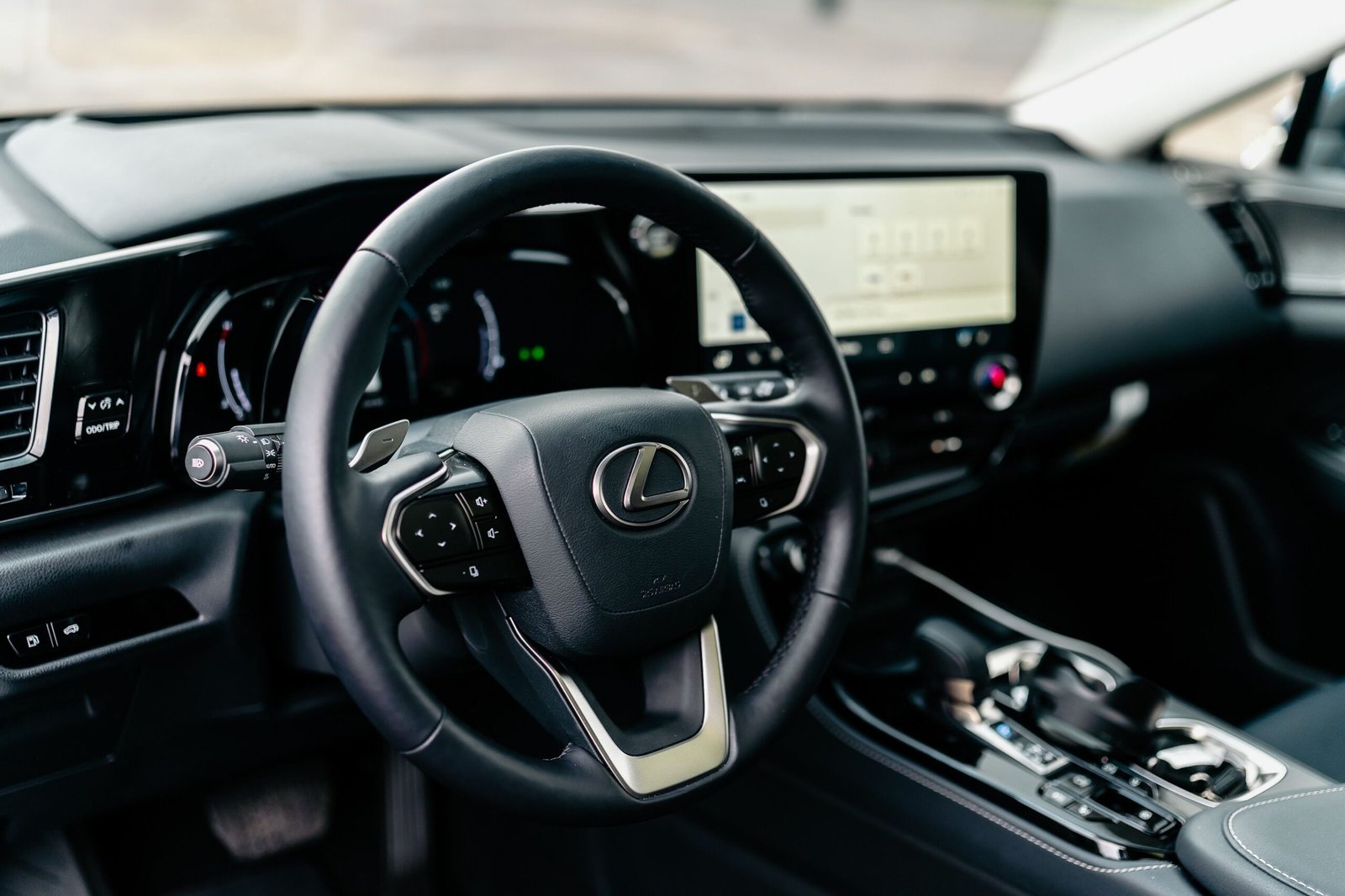
Technology is another major part of the TX cabin. A 14-inch infotainment touchscreen is standard, while a 12.3-inch digital driver information display became standard on TX 350 models for 2025. Wireless smartphone connectivity, wireless charging and available premium audio equipment add to the technology package. Buyers can also select a 21-speaker Mark Levinson audio system on appropriate trims, along with additional technology such as a head-up display, surround-view camera and digital rearview mirror depending on equipment and packages.

The interior is also designed to make long journeys more comfortable. Depending on trim, buyers can get heated and ventilated front seats, heated second-row seats, premium leather or semi-aniline leather upholstery, ambient lighting and additional comfort features. The higher trims therefore move the TX further into traditional luxury-SUV territory, while the base version still provides a substantial amount of standard equipment.

Lexus TX 2025 Cargo Space and Family Practicality

Cargo capacity is an important reason to consider the Lexus TX 2025 instead of a smaller luxury SUV. Lexus provides approximately 20.2 cubic feet of cargo space behind the third row, while the available space grows to approximately 57.4 cubic feet behind the second row and about 97 cubic feet behind the first row. These figures make the TX particularly useful for families carrying luggage, groceries, sports equipment or other large items.

This practical layout is one of the TX’s clearest differences from luxury SUVs that prioritize sleek styling over maximum interior usability. With the third row in use, there is still enough space for everyday luggage and smaller cargo. When the rear seats are folded, the TX can function as a highly practical large cargo hauler. For families who regularly carry several passengers and their belongings, this can be more important than having the fastest acceleration or the sportiest handling.

Lexus TX 2025 Fuel Economy

Fuel economy varies considerably depending on which Lexus TX 2025 powertrain is selected. The TX 350 is rated around 23 mpg combined, with the front-wheel-drive version reaching approximately 21 mpg city and 27 mpg highway. All-wheel-drive versions have slightly lower highway and city ratings. Car and Driver also recorded 31 mpg during its 75-mph highway fuel-economy test with a front-wheel-drive TX 350, although real-world results naturally depend on driving conditions, speed, weather and vehicle configuration.

The TX 500h offers better overall efficiency, with an EPA rating of approximately 27 mpg combined. The TX 550h+ takes a different approach because its plug-in-hybrid system allows electric driving before the gasoline engine becomes necessary. Lexus estimates approximately 33 miles of electric-only range, while published specifications list 76 MPGe and 29 mpg combined under the applicable testing methodology. For buyers who can regularly recharge the vehicle and have short daily commutes, the plug-in hybrid may provide significant advantages.

2025 Lexus TX Safety Features

Safety is another important part of the 2025 Lexus TX package. Lexus Safety System+ 3.0 is standard across the 2025 TX lineup. The system incorporates a range of active driver-assistance technologies intended to help drivers monitor traffic and respond to potential hazards. Depending on the system and driving conditions, features can include adaptive cruise control, lane-related assistance, blind-spot monitoring and rear cross-traffic alert.

The TX’s safety technology is particularly valuable for long-distance family driving because driver-assistance systems can reduce the workload associated with highway travel. However, these technologies should be regarded as assistance rather than autonomous driving, and the driver remains responsible for maintaining attention and control of the vehicle.

2025 Lexus TX F SPORT Handling

One of the notable changes for the 2025 model year is the arrival of the TX 350 F SPORT Handling grade. This version is available with all-wheel drive and adds equipment intended to make the TX look and feel more athletic. Features include an adaptive suspension, distinctive 22-inch wheels, ventilated front seats, a panoramic roof and a power-folding third row, along with styling changes that distinguish it from other TX 350 versions.

The F SPORT Handling model is a useful addition because it gives buyers an alternative to the traditional luxury-oriented TX formula. It does not turn the TX into a sports car, since the vehicle remains a large three-row SUV, but it provides a more distinctive appearance and additional chassis technology. For shoppers who like the practicality of the TX but want something more visually aggressive, this trim deserves consideration.

Lexus TX 2025 Price and Trims

The 2025 Lexus TX price varies significantly depending on powertrain, trim and optional equipment. Lexus announced a starting MSRP of $56,490 including destination and processing for the TX lineup. The TX 350 is available in Standard, Premium and Luxury grades, while the F SPORT Handling version is based on the TX 350 AWD. The hybrid and plug-in-hybrid versions occupy the higher end of the lineup and bring additional performance and equipment.

The middle TX 350 Premium can be an appealing balance for shoppers who want additional comfort without moving all the way to the highest-priced configuration. The Luxury grade adds further premium equipment, while the TX 500h makes sense for customers who place greater importance on acceleration and hybrid performance. The TX 550h+ is aimed at buyers who specifically want a plug-in hybrid and are prepared to pay more for its additional power and electric-driving capability.

Is the Lexus TX 2025 a Good Family SUV?

For many families, the answer is yes. The strongest argument for the Lexus TX 2025 is not outright performance but the way it combines three-row passenger space, cargo capacity, comfort, technology and Lexus refinement. Its adult-friendly third row gives it an advantage over many SUVs where the rear seats are best reserved for children, while the large cargo area makes it practical for family vacations and everyday errands. Independent automotive reviews have also highlighted its generous interior and useful technology as major strengths.

There are, however, some compromises. The TX 350 is not particularly sporty, and some reviewers have criticized aspects of its cabin materials, third-row access or ride quality. Buyers who want serious off-road capability should also look elsewhere in the Lexus lineup because the TX is primarily a road-focused crossover. The Lexus GX and LX offer a very different approach for customers who prioritize rugged terrain and traditional off-road capability.

Lexus TX 2025 vs. Competitors

The Lexus TX 2025 competes in a crowded luxury three-row SUV category that includes vehicles such as the Audi Q7, Volvo XC90, Lincoln Aviator, Acura MDX and Infiniti QX60. Its biggest advantage is the combination of space and powertrain variety. Some competitors may offer sportier driving dynamics or more prestigious cabin designs, but the TX’s three-row usability and broad selection of gasoline, hybrid and plug-in-hybrid powertrains make it a particularly versatile choice.

The TX also occupies an interesting position relative to the Toyota Grand Highlander. Both vehicles share significant underlying engineering, but the Lexus adds luxury-oriented styling, materials, technology and brand positioning. Buyers who primarily care about maximum value may find the Toyota more attractive, while those who want the Lexus experience and additional premium equipment may consider the TX worth the extra cost.

Which 2025 Lexus TX Should You Buy?

Choosing the best 2025 Lexus TX depends on how you plan to use the SUV. The TX 350 is the logical choice for buyers who want the simplest and most affordable entry into the lineup. It has plenty of power for normal driving and offers a strong combination of passenger room, cargo space and equipment. Choosing Premium can provide a useful upgrade in comfort and convenience without necessarily paying for the highest-performance powertrain.

The TX 500h is more appropriate for drivers who want quicker acceleration and improved fuel economy without needing to plug the SUV into a charger. Its 366 horsepower and 406 lb-ft of torque make it significantly more powerful than the TX 350. Meanwhile, the TX 550h+ is best suited to buyers who have convenient access to charging and want the ability to complete shorter journeys using electric power. The right choice therefore depends less on which model is universally “best” and more on whether your priority is value, luxury, performance or electrification.

Conclusion

The Lexus TX 2025 is a compelling choice for shoppers searching for a luxury three-row SUV that prioritizes usable space without abandoning premium comfort. Its adult-friendly third row, generous cargo capacity, extensive standard technology and multiple powertrain options make it one of the more versatile vehicles in its class. The TX 350 provides a practical entry point with a 275-horsepower turbocharged engine, while the TX 500h delivers 366 horsepower and improved hybrid efficiency. At the top of the lineup, the TX 550h+ combines a 404-horsepower plug-in-hybrid system with an estimated 33 miles of electric-only driving.

Ultimately, the 2025 Lexus TX is most appealing to buyers who need genuine three-row practicality but still want the quiet ride, technology and premium experience associated with Lexus. It may not be the most athletic SUV in its category, and shoppers focused primarily on off-road performance have better Lexus alternatives, but for family transportation, long-distance travel and everyday luxury, the TX offers a well-rounded package. With its combination of space, comfort, technology and powertrain choice, the Lexus TX 2025 deserves serious consideration among modern three-row luxury SUVs.

Frequently Asked Questions About Lexus TX 2025

Is the Lexus TX 2025 a good SUV?

Yes. The 2025 Lexus TX is particularly strong for buyers who need a spacious three-row luxury SUV with an adult-friendly third row, generous cargo capacity, modern technology and multiple powertrain choices.

How much does the 2025 Lexus TX cost?

The 2025 Lexus TX has a starting MSRP of $56,490 including destination and processing in the U.S. Pricing rises with higher trims, hybrid powertrains, plug-in-hybrid technology and optional equipment.

How many people can the Lexus TX 2025 seat?

Depending on configuration, the TX can seat up to seven people. Models equipped with second-row captain’s chairs generally provide seating for six.

How much horsepower does the Lexus TX 350 have?

The Lexus TX 350 uses a 2.4-liter turbocharged four-cylinder engine producing 275 horsepower and 317 lb-ft of torque.

Is the Lexus TX 2025 available as a hybrid?

Yes. The 2025 TX is available as the 366-horsepower TX 500h hybrid and the 404-horsepower TX 550h+ plug-in hybrid in addition to the conventional TX 350.

What is the electric range of the Lexus TX 550h+?

The Lexus TX 550h+ has a manufacturer-estimated electric-only range of approximately 33 miles.

How much can the 2025 Lexus TX tow?

Lexus states that the TX powertrain lineup can tow up to 5,000 pounds when properly equipped.

Does the Lexus TX 2025 have all-wheel drive?

All-wheel drive is available on the TX 350, while the TX 500h and TX 550h+ use all-wheel-drive systems as part of their electrified powertrains.

What is new for the 2025 Lexus TX?

For 2025, Lexus adds the TX 350 F SPORT Handling grade, makes the 12.3-inch multi-information display standard on TX 350 models and continues offering the three-powertrain strategy introduced with the TX.

Is the Lexus TX 2025 good for long road trips?

The TX is well suited to long-distance travel because it combines a spacious three-row cabin, substantial cargo capacity, available all-wheel drive, highway-oriented comfort and a wide selection of driver-assistance technologies. Its hybrid versions can also provide improved fuel efficiency compared with the conventional TX 350.

Continue Reading

Blogs

Lost in Transmission ARC Raiders: Complete Quest Guide and Walkthrough

Published

on

Lost in Transmission ARC Raiders

Lost in Transmission in ARC Raiders is a quest that looks straightforward on paper but can become surprisingly dangerous once you enter the Spaceport and approach Control Tower A6. The mission is given by Shani and requires players to visit Control Tower A6, reach the top of the tower, and establish a connection from a terminal. The objectives themselves are simple, but the combination of a required key, a valuable location, enemy threats, and other Raiders can turn a short mission into a stressful raid. Current quest information lists the mission as requiring all three objectives to be completed in one round, making preparation especially important.

If you are searching for a reliable Lost in Transmission ARC Raiders walkthrough, the most important thing to understand is the route before you deploy. The quest takes place on the Spaceport map, specifically at Control Tower A6, a tall and recognizable structure. After accepting the mission, you are provided with the Spaceport Control Tower Key, which is intended to give you access to the locked route leading upward. Once inside, you need to use the zipline to reach the upper control room and interact with the terminal. Completing the terminal interaction is what advances the mission toward completion, after which you should focus on surviving the extraction rather than taking unnecessary risks.

What Is Lost in Transmission in ARC Raiders?

Lost in Transmission is a quest connected to Shani’s questline in ARC Raiders. The mission sends you to Spaceport because Shani has equipment installed at the control tower for monitoring ARC activity. Her connection has been interrupted, and your task is essentially to restore access so she can retrieve the information being collected. The quest therefore fits naturally into ARC Raiders’ broader gameplay loop, where players leave Speranza, enter a dangerous map, complete objectives while dealing with ARC machines and rival Raiders, and then attempt to extract safely with their progress and loot intact.

The official objective sequence is concise: visit Control Tower A6, reach the top of Control Tower A6, and establish a connection from the terminal. Quest databases also list the mission as a one-round completion, meaning you should treat the entire sequence as one continuous raid objective rather than assuming you can make progress over several separate attempts.

Where to Find Control Tower A6 in ARC Raiders

The main destination for the Lost in Transmission ARC Raiders quest is Control Tower A6 on the Spaceport map. The tower is relatively easy to recognize because it is a tall structure that stands out from much of the surrounding area. Your objective is not simply to visit the building and leave; you need to find the route that allows you to reach its upper section, where the quest terminal is located.

The biggest mistake players can make is approaching the location without understanding that access to the upper area is restricted. The Spaceport Control Tower Key is therefore an important part of the mission. Current guides explain that the key is granted when the quest is accepted, so it is wise to protect it during your raid rather than placing yourself in unnecessary situations where you could lose it. GameSpot also notes that the area can attract other Raiders because the locked room contains valuable loot, meaning Control Tower A6 is not necessarily a quiet quest destination.

How to Complete Lost in Transmission ARC Raiders

Step 1: Accept the Quest From Shani

The first step is to have Lost in Transmission active in your quest list. The mission comes from Shani, and quest information identifies Shani as the trader associated with the mission. When you accept the quest, you receive the Spaceport Control Tower Key, which is the critical item needed to access the route toward the top of Control Tower A6.

Before deploying, check that the quest is actually selected and that the key is safely stored in your inventory or safe pocket as appropriate. This small preparation step can save an entire raid. If you arrive at Control Tower A6 without the necessary access item, you may find yourself unable to complete the intended route and may have to search for another key or attempt the mission again. Some guides report that replacement keys can be found through loot, but protecting the key provided with the quest is clearly the simpler approach.

Step 2: Travel to Spaceport and Find Control Tower A6

Once you deploy onto Spaceport, make your way toward Control Tower A6. Because this location is associated with the quest objective, you should avoid wasting too much time if your primary goal is simply to complete Lost in Transmission. Spaceport is dangerous, and unnecessary looting or fighting can expose you to additional risks before you have completed the mission.

The tower itself is a useful landmark because of its height. When you reach the building, look for the entrance and access point leading toward the locked section. There can be more than one entrance or approach route, but the important thing is ultimately reaching the locked access area and using the Spaceport Control Tower Key to proceed.

Step 3: Use the Spaceport Control Tower Key

The Spaceport Control Tower Key is one of the most important parts of this quest. Guides explain that the key opens the locked route that leads toward the zipline used to reach the upper part of Control Tower A6. Make sure you have the key with you before entering the raid because arriving at the tower and discovering that you cannot open the necessary door can turn an otherwise successful run into a wasted attempt.

Another important consideration is that other Raiders may already have visited the tower. If the access point has already been opened, the situation can be different from what you expect. This is also why you should stay alert rather than assuming that completing a quest objective automatically makes the surrounding area safe. Control Tower A6 can contain worthwhile loot, so other players may have their own reasons for being there even if they are not completing Lost in Transmission.

Step 4: Reach the Top of Control Tower A6

After accessing the appropriate area, your next objective is to reach the top of Control Tower A6. The route involves a zipline that carries you upward into the tower’s upper section. Once you arrive at the top, the mission advances to its final objective.

This is a particularly important moment because the upper section can be dangerous. You may encounter ARC enemies as well as other players, and the enclosed nature of the control room can make unexpected encounters more difficult to handle. A sensible approach is to listen for nearby movement, avoid rushing blindly into the room, and make sure you are prepared to fight if necessary. Your objective is not to eliminate every enemy in the area; your objective is to establish the connection and survive the raid.

Step 5: Find the Terminal and Establish the Connection

Once you reach the top of Control Tower A6, look for the terminal required by the quest. Current walkthroughs describe the terminal as being on the left side of the upper control room. Interacting with it establishes the connection and completes the main objective sequence for Lost in Transmission.

This is the point where many players can make a simple mistake: reaching the tower is not enough. You must actually interact with the terminal. Check your objective after entering the room and make sure the connection has registered before moving on. Once the terminal interaction is complete, you have accomplished the critical part of the quest, but you still need to survive the remainder of the raid and extract successfully.

What Is the Lost in Transmission ARC Raiders Reward?

The listed reward for Lost in Transmission is one Snap Hook. Quest databases currently show the Snap Hook as the reward for completing the mission.

The Snap Hook is particularly useful because ARC Raiders places significant emphasis on movement, positioning, and navigating vertical environments. Completing Lost in Transmission therefore provides more than just another completed mission in your quest log; it also gives you an item that can contribute to your movement options during future raids. Some guides specifically highlight the Snap Hook as useful for movement around large structures and obstacles.

Best Tips for Completing Lost in Transmission

The safest approach to Lost in Transmission ARC Raiders is to think of the quest as a focused objective run rather than an invitation to explore every part of Spaceport. The mission itself does not require an elaborate sequence of objectives. Your main priorities are getting to Control Tower A6, reaching the upper section, interacting with the terminal, and getting out alive. The longer you remain in a high-value area, the greater the opportunity for another Raider to find you, so completing the objective efficiently can be more valuable than collecting every available item.

Protecting the Spaceport Control Tower Key is another major priority. Because the intended route depends on access to the locked section, losing the key can complicate the mission considerably. Before deployment, make sure you know where the key is stored and avoid treating it like an ordinary disposable item. If you have already lost the key, replacement availability may depend on loot, so recovering another one can be more troublesome than simply keeping the original safe.

You should also prepare for PvP. Control Tower A6 can be attractive to other players because of its loot, so there is no guarantee that you will have the tower to yourself. GameSpot specifically warns that Raiders may contest the location, while other guides recommend approaching the tower strategically if you want to reduce the chance of confrontation.

Finally, remember that the quest is designed around completing its objectives in one round. That makes survival just as important as navigation. Do not rush into a fight simply because another player is nearby, and do not spend unnecessary time looting before you have completed the terminal interaction. Once the objective is finished, evaluate the situation and choose a safe extraction route.

Common Problems With Lost in Transmission

One of the most common problems players encounter is reaching Control Tower A6 without the required key. This can happen if the key was lost before reaching the tower or if a player misunderstood how the quest’s access system works. Since the key is granted when the quest is accepted, checking your equipment before deployment is one of the easiest ways to prevent this problem.

Another common issue is reaching the top of the tower but failing to interact with the terminal. The mission has multiple objectives, and simply reaching the destination does not mean the quest is finished. After reaching the upper room, locate the terminal and interact with it until the objective registers. Only then should you consider the main quest task complete.

Players can also underestimate the danger posed by other Raiders. A quest location may look like a PvE objective, but ARC Raiders is built around encounters with other players, and a valuable location can attract people who are not interested in helping you complete your mission. Staying alert and choosing when to fight can therefore be just as important as knowing the correct route.

What Comes After Lost in Transmission?

Completing Lost in Transmission continues Shani’s quest progression. Current quest information lists Communication Hideout as the next quest in the chain. That mission moves the action to Buried City and involves reaching the Red Tower in Old Town, finding a missing battery cell, installing it in a generator, restoring power, and booting an antenna terminal.

This progression makes Lost in Transmission more than an isolated Spaceport objective. It is part of a larger sequence that develops Shani’s storyline and gradually sends the player into different environments and challenges. If you are working through Shani’s quests, completing Lost in Transmission efficiently is therefore useful for keeping that progression moving.

Lost in Transmission ARC Raiders: Quick Checklist

Before starting the raid, use this checklist to make sure you are prepared:

  • Activate Lost in Transmission with Shani.
  • Confirm that you have the Spaceport Control Tower Key.
  • Deploy to the Spaceport map.
  • Locate Control Tower A6.
  • Enter the tower and use the required access route.
  • Take the zipline toward the top.
  • Reach the upper control room.
  • Find the quest terminal.
  • Establish the connection.
  • Confirm that the objective registers.
  • Watch for other Raiders.
  • Extract safely.

Following these steps keeps the mission simple and reduces the chance that you will waste a raid because of a missed interaction or forgotten item.

Frequently Asked Questions

What is Lost in Transmission in ARC Raiders?

Lost in Transmission is a quest from Shani that takes place at Control Tower A6 on the Spaceport map. Its objectives are to visit Control Tower A6, reach its top, and establish a connection from the terminal.

Where is Control Tower A6 in ARC Raiders?

Control Tower A6 is located on the Spaceport map and is recognizable as a tall tower structure. The quest requires you to reach the upper portion of this tower.

Do you need a key for Lost in Transmission?

Yes. The Spaceport Control Tower Key is the intended access item for the locked route to the upper section. The quest grants the key when accepted according to current quest information.

What is the Lost in Transmission reward?

The current quest listings show one Snap Hook as the reward for completing Lost in Transmission.

Does Lost in Transmission have to be completed in one raid?

Yes. Current quest databases list the mission as a one-round quest, meaning the objectives need to be completed during the same raid.

Where is the terminal in Lost in Transmission?

The terminal is located in the upper control room of Control Tower A6. After reaching the top, look toward the left side of the room for the terminal and interact with it to establish the connection.

Is Lost in Transmission difficult?

The objectives are relatively simple, but the quest can be dangerous because Control Tower A6 is a contested location and the mission requires you to complete the sequence in one round. Preparation, awareness of other players, and a quick route through the tower can make the mission considerably easier.

Conclusion

Lost in Transmission ARC Raiders is a straightforward quest with a deceptively risky execution. The mission asks you to travel to Spaceport, locate Control Tower A6, reach its upper section, and establish a connection through the terminal. The real challenge comes from preparing correctly, protecting the Spaceport Control Tower Key, dealing with ARC threats, watching for rival Raiders, and completing the objectives during a single raid.

The best strategy is to keep the mission focused. Accept the quest from Shani, secure the key, travel directly toward Control Tower A6, use the access route and zipline to reach the top, activate the terminal, and then prioritize a safe extraction. Once you understand this route, Lost in Transmission in ARC Raiders becomes much less confusing and much easier to complete consistently. The reward of a Snap Hook also makes the mission worthwhile, especially for players who want additional movement options for future raids.

Continue Reading

Trending